How Long Does Asbestos Testing Take?
On-site asbestos sample collection takes about 30 to 60 minutes for a typical Broward County home. Lab analysis then runs 2 to 3 business days under standard turnaround, using EPA's PLM method at an accredited lab. A 24-hour or same-day rush is often available when a permit deadline or closing date requires a faster result.
A closing date is set, a contractor is waiting on a permit, or a renovation crew is booked to start next week — and the one step nobody can put a firm date on is the asbestos test. Some online estimates promise results within the hour; others describe waits that stretch past a week with no real explanation. Separating the on-site visit from the lab step clears up most of that confusion.
How Long Does On-Site Sample Collection Take?
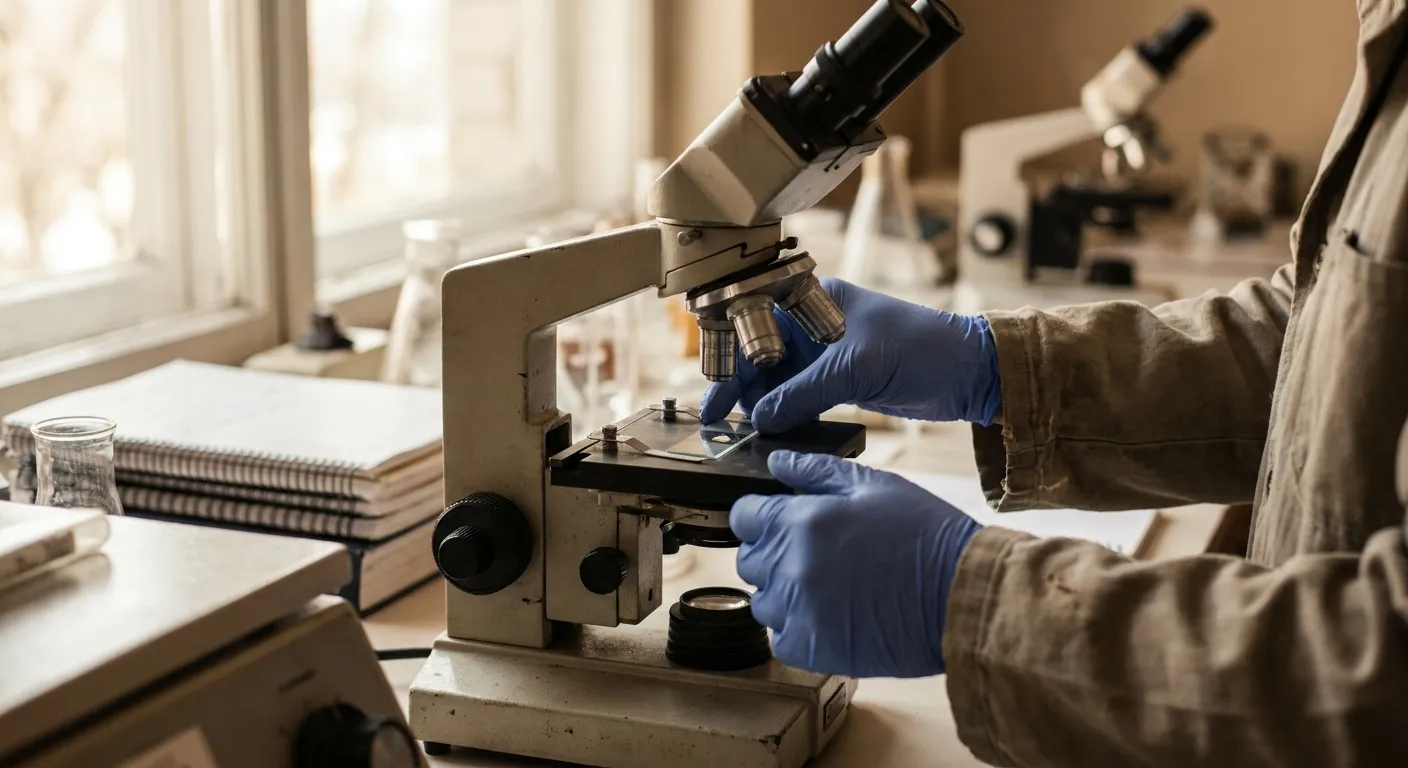
On-site asbestos sample collection typically takes 30 to 60 minutes for a standard Broward County home, whether the inspector is testing a single suspect material like popcorn ceiling texture or several materials in the same visit, and that window covers a visual inspection of accessible areas plus collecting small bulk samples — a coin-sized piece of ceiling texture or floor tile, for example — sealed, labeled, and prepared for shipment to the lab. It does not include analysis, which happens off-site once the inspector has left.
Asbestos cannot be identified by sight, so the visit itself is a sample-collection step, not a result. As our licensed inspectors describe it: “We’re not diagnosing anything in the house — we’re collecting a clean, representative sample so the lab can tell us what’s actually in it.” A fast visit does not mean a fast answer, since the material only gets identified once it reaches the lab.
How Long Does Lab Analysis Take, and Can You Get Rush Results?
Lab analysis for a standard asbestos test typically takes 2 to 3 business days from the time samples arrive at the lab, using Polarized Light Microscopy, the method EPA describes in Method 600/R-93/116, performed at an NVLAP- or AIHA-accredited facility, and a 24-hour or same-day rush is often available when a closing date or permit deadline does not leave room for that standard window. The rush option changes how fast the lab processes an already-collected sample, not the on-site visit itself, which stays roughly 30 to 60 minutes either way.
| Service | On-Site Time | Lab Turnaround |
|---|---|---|
| Single-sample test (one material) | About 30-60 minutes | Standard 2-3 business days |
| Multi-sample test (several materials, same visit) | About 30-60 minutes, same visit | Standard 2-3 business days, same batch |
| Pre-demolition or pre-renovation survey | Longer than a single visit — scales with material count | Standard 2-3 business days after the last sample is logged |
| Rush / same-day result | Same on-site time as above | 24-hour or same-day, where available |
OSHA has been clear that there is no established safe level of asbestos exposure, which is part of why the lab step is not something to shortcut even under a tight deadline — rush turnaround speeds up the queue, not the care taken with the sample.
Does a Full Survey Take Longer Than a Single Test?
A full pre-demolition or pre-renovation survey takes longer on-site than a single-material test because more suspect materials are being sampled, but the lab turnaround stays on the same 2-to-3-business-day standard once samples are logged, and that on-site difference traces back to federal rule and the number of materials involved, not to inspector preference or how the visit is priced. Under EPA’s NESHAP rule (40 CFR Part 61, Subpart M), a thorough asbestos inspection is required before demolition or renovation of a regulated facility, which is why a full pre-demolition survey samples every suspect material rather than checking one and calling it done. A few things typically add on-site time:
- Number of distinct suspect materials on the property, each requiring its own sample
- Total square footage and number of separate rooms or units
- Accessibility of attics, crawlspaces, and mechanical areas
- Whether the project is commercial, which usually means more materials than a single-family home
A rush fee, where available, is typically added on top of the standard testing cost for the sample count involved — it is worth asking about before booking rather than after samples are already in transit.
How Does the Timeline Affect a Broward County Permit?
Broward County requires a Statement of Responsibilities Regarding Asbestos (SRRA), filed online through the county’s ePermits system, before a demolition or renovation permit can move forward, and results have to be in hand before that filing is complete, according to broward.org, and larger projects can also trigger Florida DEP’s Notice of Demolition or Asbestos Renovation under rule 62-257.900, which requires 10 working days’ notice before work starts. That means testing needs to happen early enough in the schedule to leave room for the notification window rather than at the last minute. Residential buildings with four or fewer dwelling units are generally exempt from that federal and county notification requirement beyond the online SRRA submittal, according to broward.org, which is one reason a straightforward single-family renovation often clears the process faster than a commercial or multi-unit project.
The practical planning question is the same either way: count backward from the permit date or closing date, add the standard 2-to-3-day lab turnaround (or the rush window if the schedule is tight), and book the on-site visit with enough runway to spare. If your timeline is already tight, our inspectors across Broward County can usually tell you, before anyone books an appointment, whether standard turnaround fits your date or whether rush service is worth the extra cost. Get my free quote and we’ll confirm a realistic timeline for your address before scheduling.